
Invisalign Chicago: Your Guide to a Straighter, More Confident Smile

Root Canal Chicago – Save Your Natural Smile with Gentle, Advanced Care at East Erie Dental
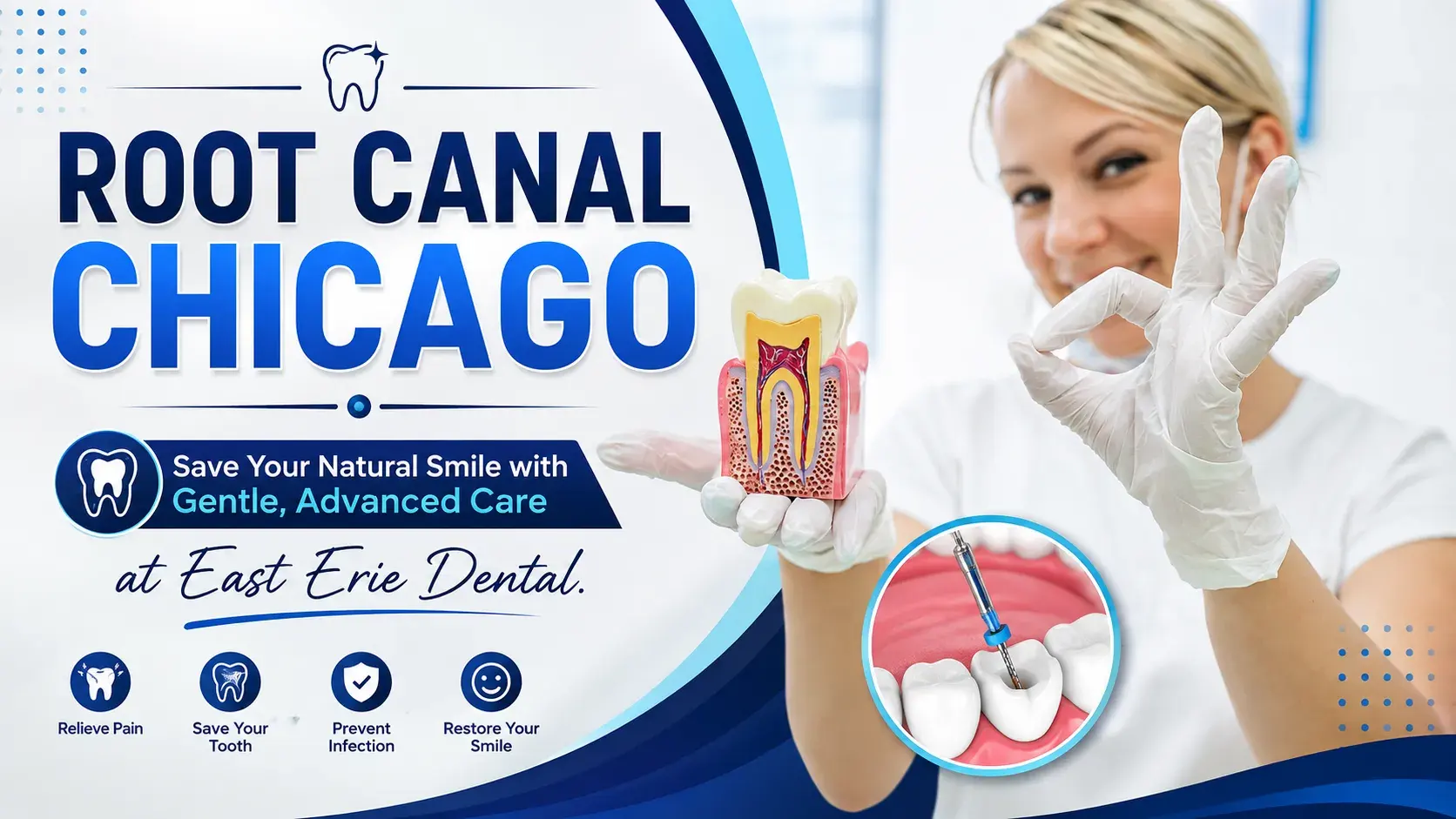
Need a root canal in Chicago? East Erie Dental offers gentle, advanced root canal treatment to relieve pain, save your natural tooth, and restore your smile.
A severe toothache can quickly turn everyday moments into painful experiences. Whether you’re enjoying Chicago’s vibrant food scene, attending work, or spending time with family, persistent dental pain can affect every aspect of your life.
The good news?
Modern Root Canal Chicago treatment is nothing like the myths you’ve probably heard. Thanks to advanced technology, modern anaesthesia, and experienced dentists, root canal therapy is now a comfortable, highly successful procedure designed to eliminate pain—not cause it.
At East Erie Dental, we help Chicago residents preserve their natural teeth using precise, minimally invasive root canal treatment that restores oral health while protecting your smile for years to come.
Don’t Let Tooth Pain Control Your Life — Save Your Tooth Before It’s Too Late!
What is a Root Canal?
A root canal is a restorative dental procedure that removes infected or damaged tissue (called dental pulp) from inside a tooth.
Once the infection is removed, the inside of the tooth is thoroughly cleaned, disinfected, and sealed to prevent future bacteria from entering.
Finally, the tooth is restored with a durable filling or custom dental crown, allowing you to chew, smile, and speak naturally again.
Instead of extracting your tooth, a root canal saves it.
Why Do You Need a Root Canal?
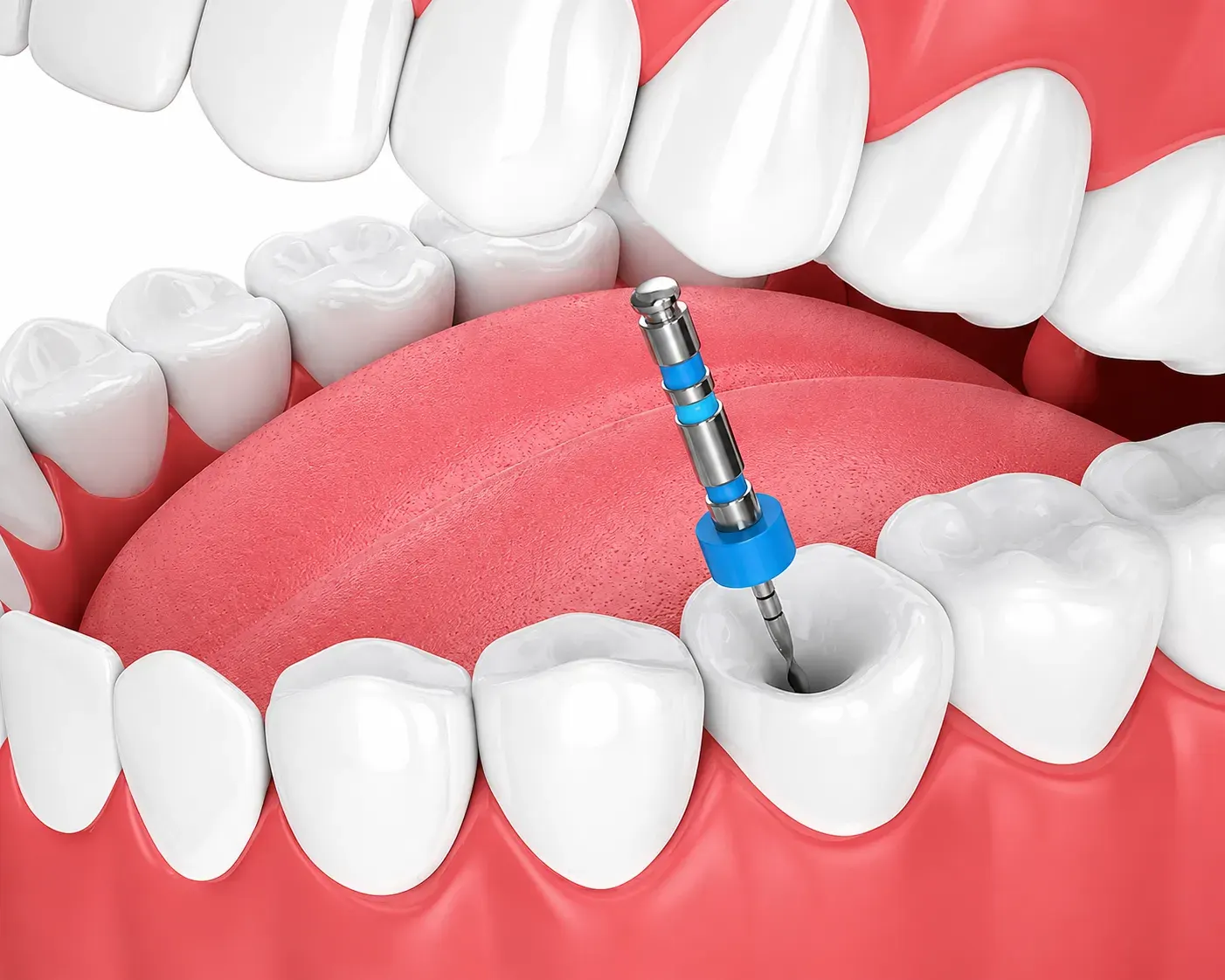
Inside every tooth is soft tissue containing:
- Blood vessels
- Nerves
- Connective tissue
When bacteria enter this area through:
- Deep cavities
- Large fillings
- Tooth fractures
- Cracks
- Dental trauma
- Gum disease
The pulp becomes inflamed or infected.
Without treatment, the infection can spread into the jawbone, resulting in:
- Severe pain
- Dental abscess
- Swollen face
- Bone loss
- Tooth loss
A root canal stops the infection before these complications occur.
Common Signs You May Need a Root Canal
Many patients ignore early symptoms until the pain becomes unbearable.
Watch for these warning signs:
- Persistent toothache
- Sharp pain while chewing
- Sensitivity to hot or cold that lingers
- Swollen or tender gums
- Darkened tooth
- Gum pimple or abscess
- Facial swelling
- Pain that keeps you awake
If you’re experiencing any of these symptoms, schedule an evaluation immediately.
Why saving your natural tooth is always the best option?
Nothing functions quite like your natural teeth.
Saving your original tooth helps maintain:
- Natural bite alignment
- Jawbone health
- Comfortable chewing
- Clear speech
- Facial appearance
- Long-term oral health
A root canal is often less expensive and less invasive than replacing an extracted tooth with an implant or bridge.
Root Canal Procedure at East Erie Dental
Our goal is simple:
Comfort. Precision. Long-lasting results.
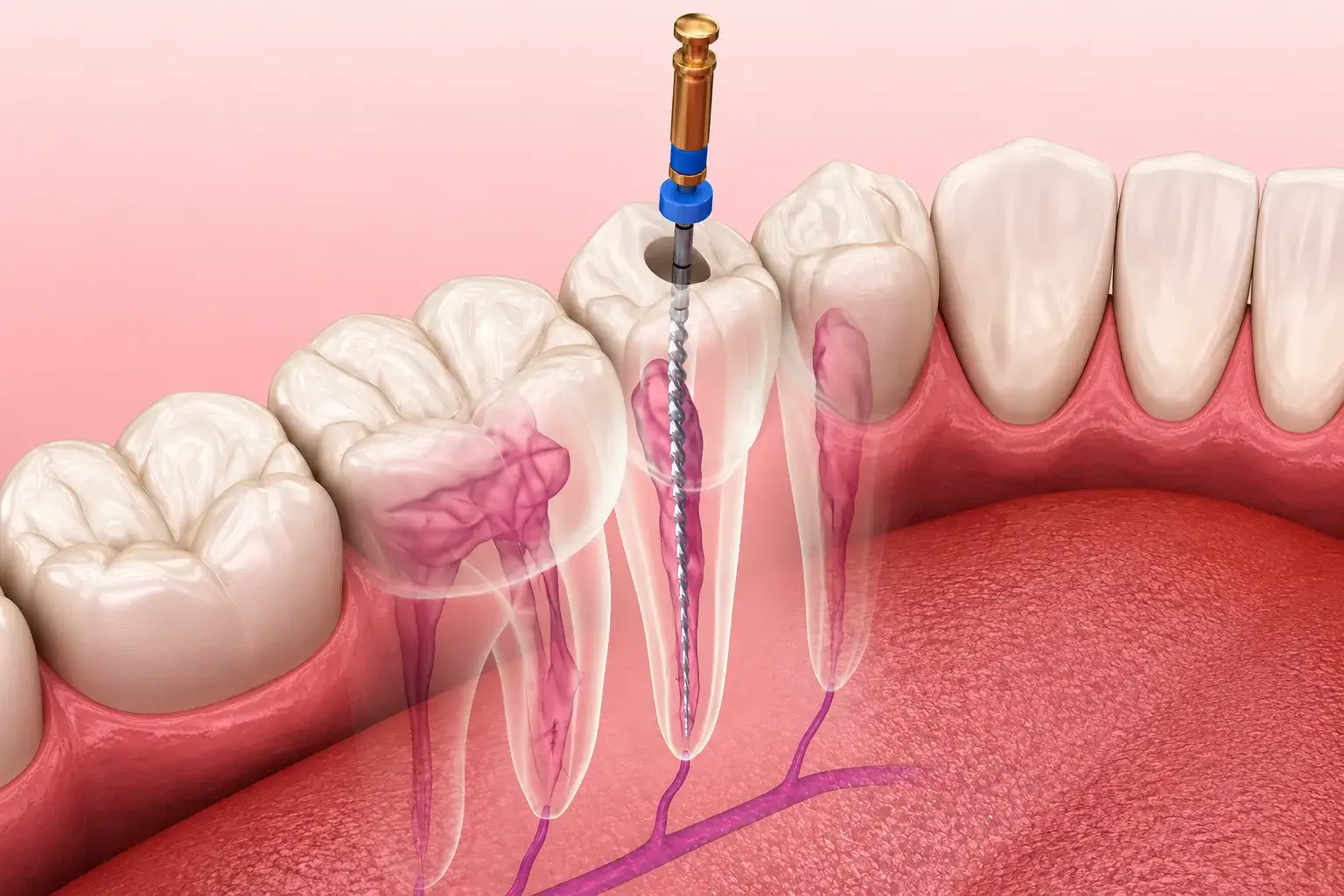
Step 1: Complete Examination
We begin with:
- Digital X-rays
- Clinical examination
- Infection assessment
- Treatment planning
Step 2: Gentle Local Anaesthesia
Modern numbing techniques make treatment comfortable.
Most patients say the procedure feels similar to getting a routine filling.
Step 3: Remove the Infection
Small instruments are used to remove infected pulp while preserving healthy tooth structure.
Step 4: Clean and Disinfect
The canals are carefully disinfected to eliminate harmful bacteria.
Step 5: Seal the Tooth
The canals are sealed using biocompatible material to prevent reinfection.
Step 6: Final Restoration
Most root canal-treated teeth receive a custom dental crown for maximum protection and durability.
Is a Root Canal Painful?
This is the biggest misconception in dentistry.
Today’s root canal treatment is designed to relieve pain—not create it.
Advanced anaesthesia and modern techniques allow most patients to remain comfortable throughout the procedure.
After treatment, mild soreness may occur for a few days and is usually manageable with over-the-counter medication.
Benefits of Root Canal Treatment
Choosing Root Canal Chicago treatment offers many advantages:
Relieves Severe Pain
Removes infected nerves causing discomfort.
Saves Your Natural Tooth
Avoid unnecessary extractions.
Stops Infection
Prevents bacteria from spreading into surrounding bone.
Restores Normal Function
Eat, speak, and smile comfortably again.
Cost-Effective
Often more affordable than replacing a missing tooth.
Long-Term Success
Properly restored root canal-treated teeth can last decades.
Why Chicago Patients Choose East Erie Dental
Finding the right dentist matters.
At East Erie Dental, patients receive compassionate care supported by advanced technology and personalized treatment plans.
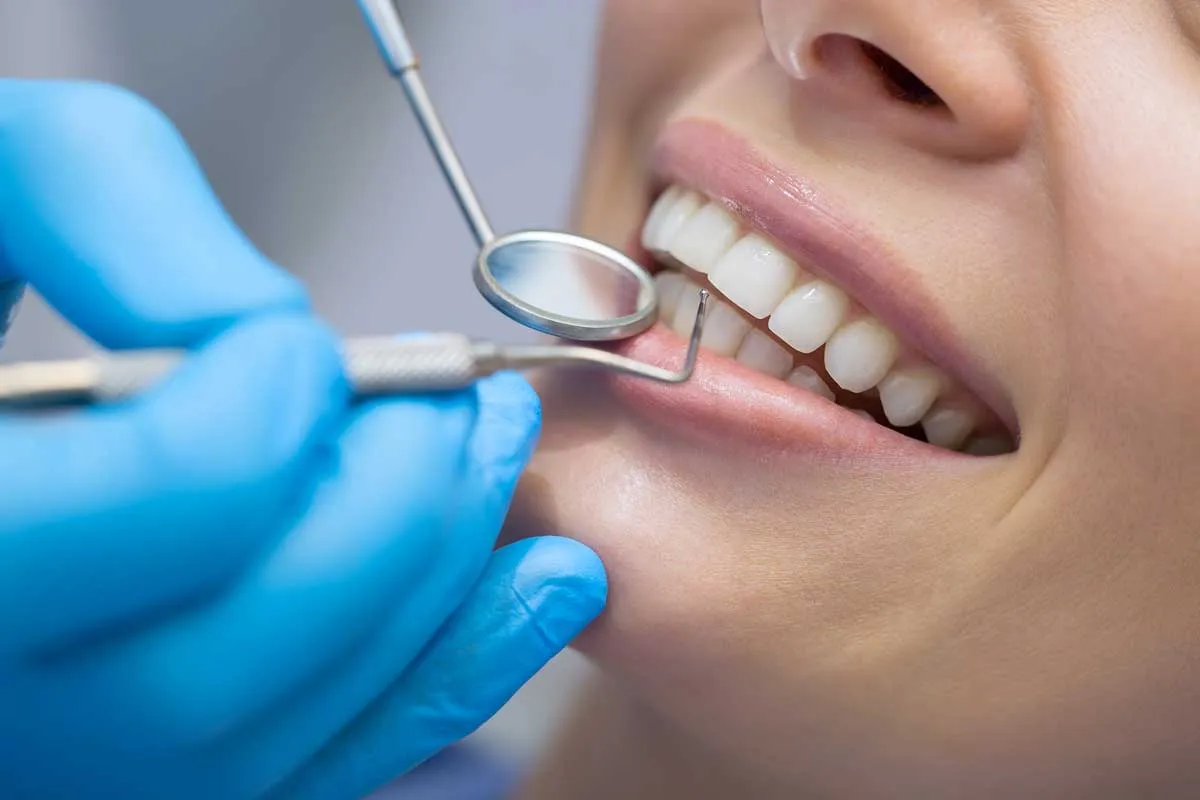
Our Advantages:
- Experienced dental professionals
- Modern digital imaging
- Comfortable treatment environment
- Gentle anaesthesia techniques
- Same-day emergency appointments (when available)
- High-quality custom restorations
- Convenient downtown Chicago location
- Patient-focused care from consultation to recovery
How Long Does a Root Canal Take?
Most root canal treatments require:
- 60–90 minutes
- One appointment
- Occasionally two visits for complex infections
The exact time depends on:
- Tooth location
- Number of canals
- Severity of infection
Recovery After Root Canal Treatment
Recovery is generally quick.
Most patients return to normal activities the next day.
For the best healing:
- Avoid chewing on the treated tooth until fully restored.
- Take medications as directed.
- Brush and floss gently.
- Attend follow-up appointments.
- Receive your permanent crown promptly.
Precautions After Your Root Canal
To protect your treated tooth:
- Avoid hard foods for several days
- Maintain excellent oral hygiene
- Wear a night guard if you grind your teeth
- Attend routine dental check-ups
- Never ignore recurring discomfort
Root Canal vs Tooth Extraction
| Root Canal | Tooth Extraction |
| Saves natural tooth | Removes tooth permanently |
| Preserves jawbone | Bone may shrink over time |
| Natural chewing ability | Tooth replacement often required |
| Better long-term function | Implant or bridge may be needed |
| Cost-effective over time | Replacement increases overall cost |
Whenever possible, preserving your natural tooth is typically the preferred option.
Safety of Root Canal Treatment
- Modern root canal therapy is one of the safest and most predictable procedures in dentistry.
- Advanced sterilization protocols, digital imaging, and precise instruments help achieve excellent outcomes while reducing the risk of complications.
- With proper restoration and good oral hygiene, many treated teeth remain healthy for decades.
How to Prevent Future Root Canals
Although not every root canal can be prevented, healthy habits reduce your risk.

- Brush twice daily with fluoride toothpaste.
- Floss every day.
- Visit your dentist every six months.
- Treat cavities early.
- Wear a mouth guard during sports.
- Avoid chewing ice or hard objects.
- Address cracked teeth promptly.
What Makes East Erie Dental Different?
Our philosophy goes beyond treating teeth.
We focus on:
- Patient comfort
- Honest recommendations
- Conservative treatment
- Advanced technology
- Long-term oral health
- Personalized dental care
Every treatment plan is tailored to your unique needs, ensuring you receive the most appropriate care.
Frequently Asked Questions
Q1. Is a root canal better than removing the tooth?
Ans: Yes. Saving your natural tooth is usually the healthiest long-term solution whenever possible.
Q2. How long does a root canal last?
Ans: With proper care and a well-fitted crown, many root canal-treated teeth last 15 years or longer, and often much longer.
Q3. Can I drive home after my appointment?
Ans: Yes. Most patients are able to drive themselves home after receiving local anaesthesia.
Q4. Will I need a crown?
Ans: In many cases, yes. A crown helps protect the treated tooth from fractures and restores its strength.
Q5. What happens if I delay treatment?
Ans: Delaying treatment allows the infection to spread, increasing the risk of abscesses, bone damage, and tooth loss.
Q6. Is root canal treatment covered by dental insurance?
Ans: Many dental insurance plans provide partial coverage for medically necessary root canal treatment. Coverage varies by provider and plan.
Q7. How successful is root canal therapy?
Ans: Modern root canal treatment has a high success rate when performed correctly and followed by proper restoration and oral hygiene.
Restore Your Smile with Confidence
Ignoring tooth pain rarely makes it disappear—it often becomes more serious over time. If you’re dealing with persistent discomfort, sensitivity, or signs of infection, early treatment can help preserve your natural tooth and prevent more complex dental problems.
At East Erie Dental, we’re committed to providing comfortable, advanced Root Canal Chicago treatment tailored to your needs. Using modern technology and a patient-first approach, we help Chicago residents relieve pain, protect their oral health, and smile with confidence again.
Whether you need an urgent evaluation or want expert advice about your symptoms, our experienced team is here to help you every step of the way.
More Blog Posts







Copyright © East Erie Dental - SE Chicago Dentistry. All Rights Reserved
(312) 587-0200
You have loaded the Cookie Policy without javascript support. On AMP, you can use the manage consent button on the bottom of the page.