
What Is the Recovery Time for Dental Implants?

How to Know If You Need a Dental Bridge
A missing tooth rarely stays a one-tooth problem. Once a gap opens up in your smile, the teeth around it can start to drift, your bite can shift, and everyday habits like chewing or speaking clearly can become more difficult than they used to be. A dental bridge is one of the most reliable ways to close that gap, but how do you know if it is actually the right option for you?
Here are the signs your dentist looks for when deciding if a bridge makes sense, along with what to expect if you move forward with treatment.
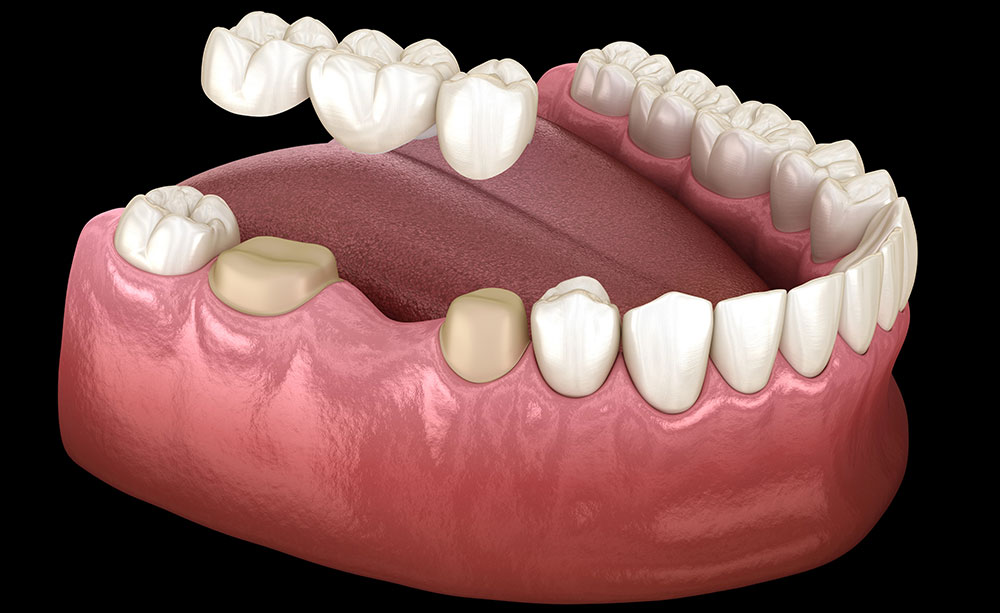
You Are Missing One or More Teeth
The most obvious sign is the simplest one: you have a gap from a missing tooth, whether it was lost to decay, injury, or a tooth extraction. Bridges are designed to fill the space left behind by one or two consecutive missing teeth, restoring both the look and the function of that section of your smile.
If you are missing several teeth in a row or have lost most of your teeth on one arch, a bridge may not be the most practical option. In those cases, a removable or full-arch solution like dentures is often a better fit, and your dentist can walk you through which approach suits your situation.
Your Nearby Teeth Are Starting to Shift
Teeth are not static. When a gap is left untreated, the teeth on either side of it tend to lean or drift into the open space over time, and the opposing tooth on the other arch can also shift downward or upward looking for something to bite against. If you have noticed your teeth moving, your bite feeling slightly off, or new gaps appearing where there were not any before, that drifting is a strong signal that it is time to talk about a bridge before the movement becomes more difficult to correct.
Chewing or Speaking Has Become Difficult
Missing teeth change the way your mouth functions, not just how it looks. Many patients notice they avoid chewing on one side, have trouble biting into certain foods, or develop a slight lisp or whistle when they speak. These functional changes happen because your tongue, lips, and remaining teeth rely on a complete arch to work together properly. A bridge restores that continuity, making it easier to eat and speak without compensating for the gap.
The Surrounding Teeth Are Healthy Enough to Support a Bridge
A traditional fixed bridge relies on the teeth next to the gap, known as abutment teeth, to anchor the prosthetic in place. These teeth are reshaped and capped with crowns that support the artificial tooth, or pontic, suspended between them. For this to work well, the abutment teeth need to be free of significant decay or gum disease and structurally strong enough to handle the added support.
During an exam, your dentist will check the health of these neighboring teeth and the surrounding gum tissue. If the natural teeth are not strong enough to support a traditional bridge, an implant-supported bridge may be recommended instead, since it relies on a dental implant rather than your natural teeth for support.
You Want a Fixed Solution Rather Than a Removable One
Some patients are weighing a bridge against other options like a partial denture or a dental implant. If you would rather not deal with removing and cleaning an appliance every day, a bridge is a fixed restoration that stays cemented in place and functions much like your natural teeth. It is a good middle ground for patients who want a permanent feel without the longer treatment timeline that implants sometimes require.
It Has Been a While Since Your Last Dental Exam
Sometimes the need for a bridge is not obvious until a dentist takes a closer look. A routine dental exam can catch a failing tooth, an old restoration that is breaking down, or early shifting before it turns into a bigger issue. If it has been more than a year since your last checkup and you suspect something is off with a missing or damaged tooth, scheduling an exam is the best first step toward finding out what your options are.
What Happens If You Wait
Putting off treatment for a missing tooth does not make the problem stay the same size. The longer a gap is left untreated, the more likely it is that neighboring teeth will shift, your bite will become uneven, and bone loss will begin in the area where the tooth used to be. That bone loss can eventually make it harder to qualify for certain restorations, including implants, without additional treatment first. Addressing the gap sooner rather than later generally means a simpler, more predictable path to a restored smile.
Talk to a Dentist in Streeterville, Chicago About a Dental Bridge
If you are dealing with a missing tooth, shifting teeth, or changes in how you chew and speak, it is worth having a dentist take a look. At East Erie Dental, our team examines the health of your remaining teeth and gums to determine whether a fixed bridge, an implant-supported bridge, or another restorative option is the right fit for your smile.
East Erie Dental is located at 233 E Erie St, #406, Chicago, IL 60611, and we welcome new patients from Streeterville and the surrounding Chicago area. Request an appointment online to discuss your options.
Frequently Asked Questions
How do I know if I need a bridge instead of an implant?
It depends on the health of your jawbone and neighboring teeth, as well as your personal preferences. A bridge uses the teeth on either side of the gap for support, while an implant is anchored directly into the jawbone. Your dentist can recommend the better option after evaluating your bone density and the condition of your remaining teeth.
Can a bridge fix more than one missing tooth?
A traditional bridge typically replaces one or two consecutive missing teeth. For larger gaps or multiple missing teeth across an arch, your dentist may suggest a different solution, such as an implant-supported bridge or a partial denture.
Does getting a bridge require healthy teeth on both sides of the gap?
For a traditional fixed bridge, yes. The teeth on either side of the gap need to be strong enough to support a crown. If those teeth are not healthy enough, an implant-supported bridge can be used instead, since it does not rely on natural teeth for support.
How long does a dental bridge last?
With proper care, including regular brushing, flossing, and dental visits, a bridge can last 10 years or longer. Its lifespan depends on oral hygiene, the health of the supporting teeth, and how well the bridge is maintained over time.
Is getting a dental bridge painful?
The teeth are numbed before any reshaping takes place, so most patients feel little to no discomfort during the procedure. Some mild sensitivity around the gumline is normal for a few days afterward, but this typically resolves on its own.
Disclaimer
This content is intended for general informational purposes only and does not constitute medical or dental advice. Every patient’s situation is unique, and treatment experiences may vary. Please consult with a qualified dental professional for guidance specific to your individual needs and circumstances.
More Blog Posts








Copyright © East Erie Dental - SE Chicago Dentistry. All Rights Reserved
(312) 587-0200
You have loaded the Cookie Policy without javascript support. On AMP, you can use the manage consent button on the bottom of the page.